A Round Faucet Handle can look simple on a showroom shelf, yet its shape changes grip, leverage, and the feel of a room. In 2026, common options include smooth round knobs, cross handles, wheel-style controls, and rounded levers. Each suits different hands and habits. Small details matter.
For this overview, the named expert voice is illustrative, not a real-world endorsement. Fixture-design specialist Maya Chen offers this guiding line: “A good handle should feel natural before it looks impressive.” That is a useful test, though not the whole story. A polished knob may suit a compact powder room, while a cross handle can be easier to grasp with wet fingers. A rounded lever may need less wrist rotation. Check the handle’s clearance, finish, and compatibility with the faucet valve before choosing.
The sections ahead compare these styles by comfort, appearance, maintenance, and installation fit. They also consider who uses the sink: children, older adults, or anyone with limited grip strength. A detail often missed. Round shapes can feel elegant, but some smooth knobs are slippery with soapy hands. Product names and features vary by manufacturer, so verify the specifications rather than trusting a product photo. There is no single best type. The right choice is the one that works reliably at your sink, even on an ordinary, rushed morning.
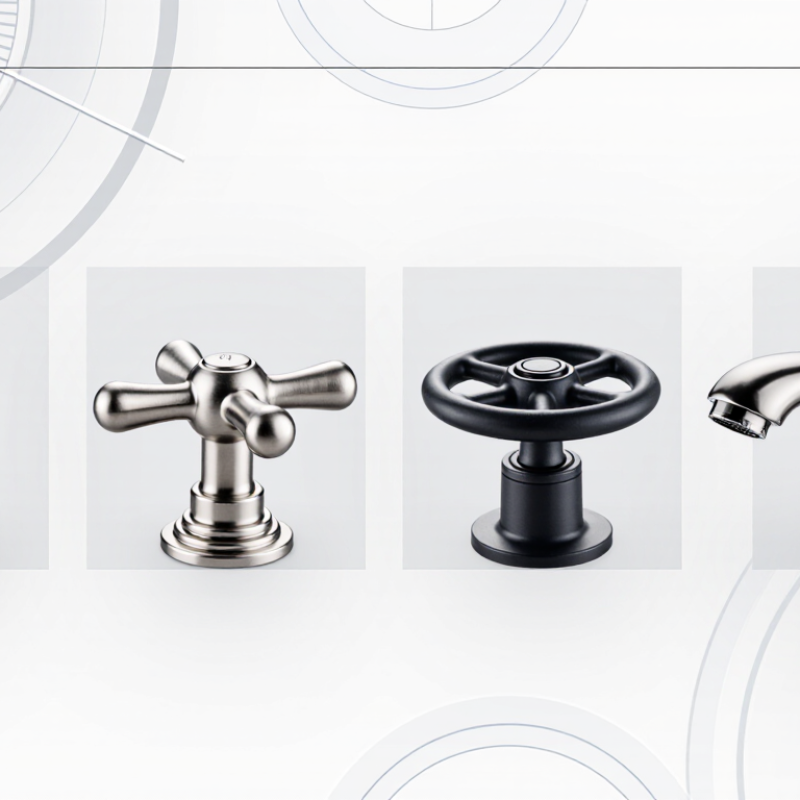
What Defines a Round Faucet Handle and Its Main Components?
What Are the Top Round Faucet Handle Types in 2026?
What Defines a Round Faucet Handle and Its Main Components?
A round faucet handle is a circular grip that turns or lifts to control water flow and, on many faucets, temperature. Its rounded edge gives fingers a smooth place to hold, while its size and surface texture affect grip. Some handles rotate; others tilt or move through a short arc. The shape alone does not reveal the valve type inside.
Most designs include a knob or grip, a central hub, and a stem or adapter connecting the handle to the valve. A retaining screw holds the handle in place, often beneath a small cap. Some faucets also have a trim plate around the base to cover the opening. Parts vary by model, so a loose handle may need a tightened screw—or a matching adapter, not a stronger grip. That distinction is easy to miss.
Tips: Before removing a handle, turn off the water if you will work near the valve. Check for a hidden cap or screw, and keep small parts together. Take a quick photo of the assembly. It may not show every detail, but it can help during reassembly. If the handle binds after fitting, stop and inspect the alignment rather than forcing it.
Which Round Faucet Handle Types Are Most Common in 2026?
The most common round faucet handle types in 2026 are single round knobs, paired round knobs, and cross handles. A single knob usually controls both temperature and flow, making it practical for compact sinks. Paired knobs give separate hot- and cold-water control. Cross handles offer a familiar, textured grip, though their spokes can collect grime. Simple shapes. Easier to wipe.
There is no widely recognized industry dataset ranking handle silhouettes by sales, so these types are best treated as common configurations, not a verified market-share list. The U.S. EPA’s WaterSense bathroom faucet specification provides a useful performance benchmark: certified faucets use no more than 1.5 gallons per minute, compared with the federal standard of 2.2 gallons per minute. That efficiency depends on the faucet, not its handle shape. Still, handle feel matters: test whether a round knob turns easily with wet hands, and check that paired knobs are clearly marked. Small details matter. A smooth, oversized knob may look clean but can be slippery; cross handles improve grip, yet may feel awkward for users with limited hand strength.
What Are the Top Round Faucet Handle Types in 2026? — Which Round Faucet Handle Types Are Most Common in 2026?
| Round Handle Type |
Typical Operation |
Common Faucet Setup |
Relative Commonness |
Typical Applications and Notes |
| Round single-lever handle |
Moves up or down to control flow and pivots or turns to adjust temperature. |
Single-handle faucets, commonly using a mixing cartridge. |
Very common in contemporary kitchens and bathrooms. |
Allows one-handed adjustment and uses a single control point. The exact motion varies by faucet design. |
| Round cross handle |
Turns like a wheel, often with crossing spokes that provide grip. |
Usually found on separate hot- and cold-water controls in two-handle faucets. |
Common in traditional and classic-style installations. |
The cross-shaped grip can be easier to grasp than a small smooth knob. Valve compatibility depends on the faucet. |
| Round knob handle |
Turns clockwise or counterclockwise to operate a valve. |
Common on two-handle faucets; some designs use knobs on a single-control faucet. |
Very common across traditional and transitional styles. |
A familiar compact shape. Smooth, small knobs may be harder to turn with limited hand strength. |
| Round dial handle |
Rotates through a limited range or turns around a central axis, depending on the mechanism. |
Used on some single-control faucets and specialized faucet designs. |
Common, but less universal than standard lever or knob handles. |
May have temperature or flow markings. Operating direction and range vary by model. |
| Round escutcheon-mounted control |
A round handle turns or pivots from a circular trim plate. |
Often used with wall-mounted or deck-mounted faucet and valve assemblies. |
Common in coordinated bathroom trim and concealed-valve installations. |
The trim plate covers the opening around the control. Handle and valve must be designed to work together. |
| Round replacement handle |
Operation follows the original faucet mechanism: turn, pivot, or lift. |
Replacement part for an existing faucet, selected to match its stem or cartridge connection. |
Common for repairs and renovations; fit is model-specific. |
Check the stem shape, attachment method, dimensions, and faucet model before purchasing. A similar appearance does not guarantee compatibility. |
Note: “Relative commonness” is a qualitative comparison of handle styles used in residential faucets, not a measured 2026 market-share ranking. Availability and compatibility vary by faucet design and installation.
How Do Different Round Handle Mechanisms Control Water Flow?
What Are the Top Round Faucet Handle Types in 2026?
How Do Different Round Handle Mechanisms Control Water Flow?
A round handle’s shape does not reveal its mechanism. Two-knob faucets often use separate stems or ceramic cartridges, each regulating one temperature. Turn a knob farther, and its valve opens wider, allowing more water through. Older compression stems press a washer against a seat; worn washers can cause drips. Ceramic-disc cartridges use closely fitted discs to control flow with a short, smooth turn. They feel precise, though mineral buildup may affect movement over time.
Single-handle round controls commonly use a cartridge, ceramic disc, or ball assembly. Moving the handle changes the opening and the hot-cold mix. Small movements matter. A quarter-turn can noticeably change the stream or temperature, depending on the valve design. The U.S. Environmental Protection Agency’s WaterSense Specification for Lavatory Faucets sets a maximum flow rate of 1.5 gallons per minute at 60 psi for labeled faucets; the federal baseline is 2.2 gallons per minute at that pressure. These figures describe tested flow, not a guarantee of the same output in every home. Supply pressure, aerators, and valve condition also play a part. A slightly uneven stream can be a clue, but it is not a diagnosis.
What Materials and Designs Shape Round Faucet Handles in 2026?
Round faucet handles in 2026 balance tactile comfort with finishes that suit changing bathroom styles. Brushed stainless steel and solid brass remain practical choices because they can withstand everyday wear when properly maintained. Matte black creates crisp contrast against pale stone, while polished chrome reflects light and shows water spots more readily. Small details matter. A softly domed knob feels different from a flat, coin-like face, especially with wet fingers.
Designers are pairing rounded silhouettes with slim stems, knurled edges, or subtle grooves. These details can improve grip without making a handle look industrial. Ceramic accents and metals with recycled content may appeal to buyers seeking a distinctive surface, but check care instructions and material disclosures. A plated finish is not the same as a solid-metal handle. That difference can affect maintenance and how scratches appear over time.
Consider hand size, mobility, water hardness, and cleaning habits alongside appearance. A large, smooth knob can be easy to grasp, yet difficult to turn with soapy hands if it lacks texture. Not always. I would compare a handle’s movement in person when possible; online photos rarely reveal its resistance or edge comfort. Trends shift, but durable finishes and replaceable parts often matter longer than dramatic shapes. Still, even a well-chosen handle will collect fingerprints and mineral marks through daily use.
How to Choose a Round Faucet Handle for Your Fixture?
Choosing a round faucet handle starts with the valve connection, not the handle’s appearance.
Check whether your faucet uses a screw, a set screw, or a splined stem. If the old handle is available, remove it carefully and photograph the connection. Count the stem’s ridges and note its diameter. Small differences can make a replacement wobble or refuse to seat. Do not shop by shape alone.
Next, match the handle to how the faucet operates.
A single round knob may control both temperature and flow, while separate round handles usually control hot and cold water independently. Check the faucet’s mounting style and leave enough clearance for fingers near a backsplash or sink rim. A smooth, slightly textured surface can be easier to grip with wet hands. Looks matter, but grip matters more.
Material and finish should suit the room and expected use.
Metal handles often feel substantial, while some lighter materials can be easier to turn but may feel less solid. Check care instructions before choosing a finish, since abrasive cleaners can dull surfaces. When uncertain, compare measurements with the fixture’s parts documentation or ask a qualified plumber. It is tempting to guess from a photo; that can waste time. A careful fit check is less exciting, but usually worth it.
Conclusion
A Round Faucet Handle is the part of a faucet that lets you adjust water flow and temperature, typically working with an internal cartridge, valve, or stem. Common styles include single-handle designs, which combine flow and temperature control, and two-handle designs, which use separate controls for hot and cold water. Their mechanisms vary: turning a handle may open a valve gradually, while lifting or rotating certain designs can regulate flow and temperature through a cartridge.
In 2026, round handles come in materials such as metal, ceramic, and durable composites, with finishes and shapes suited to both modern and traditional fixtures. When choosing one, consider compatibility with your faucet, the type of control you prefer, ease of use, durability, and how the design fits your space. A well-matched handle should feel comfortable to operate and provide reliable control without compromising the fixture’s overall appearance.

 Huazhu