7 Tips for Choosing a Single Faucet Handle

Time:2026-10-03 Author:Isabella
0%

Choosing a Single Faucet Handle can look simple until you stand beside a crowded showroom wall. Chrome, brushed nickel, matte black, ceramic cartridges, pull-down spouts, and confusing installation terms compete for attention. The right choice should match your sink, water pressure, cleaning habits, and daily reach.

Mike Holmes, a widely recognized Canadian contractor and home-improvement expert, often advises, “Make sure you do it right the first time.” His practical reminder matters here. A faucet may look elegant in a photograph, yet feel awkward when your hands are wet or covered with flour. Measure the sink holes before buying. Check the spout reach, handle clearance, and mounting depth. A beautiful Single Faucet Handle is not useful if its stream hits the countertop.

This guide explores seven practical tips for choosing with greater confidence. It considers valve quality, temperature control, finish durability, water efficiency, and installation requirements. It also examines details many buyers overlook, such as a handle that becomes stiff after years of mineral buildup. Small details matter.

Not every recommendation fits every home. A high-arc faucet may suit a deep kitchen sink but splash in a shallow basin. Matte finishes can hide fingerprints, though hard-water marks may still appear. That is the imperfect part of selection: product pages cannot recreate your sink, hands, lighting, or routine. Use specifications as evidence, not as promises. A careful decision balances appearance, performance, maintenance, and honest expectations.
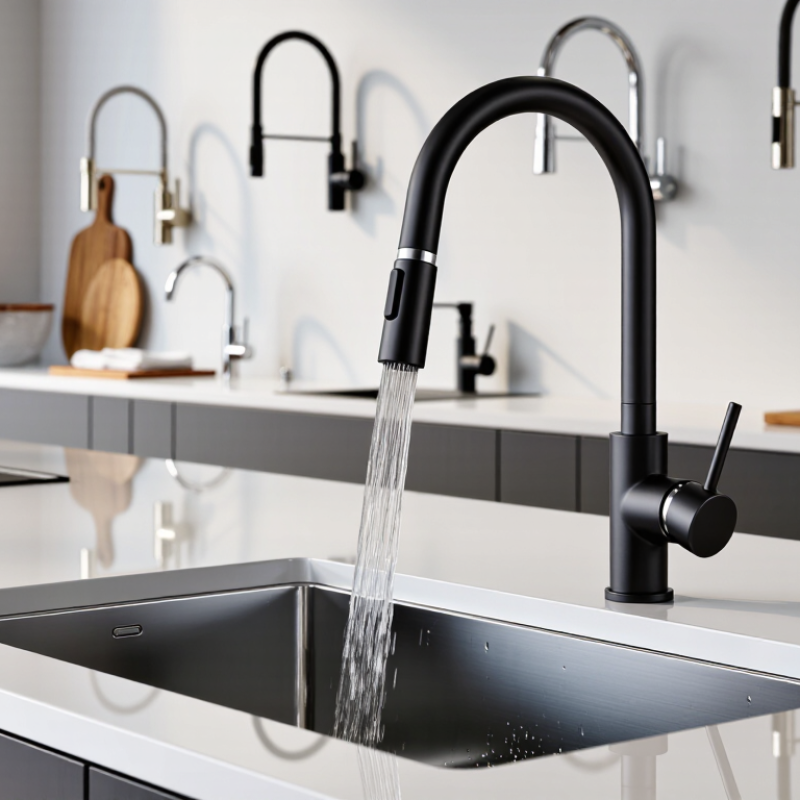
7 Tips for Choosing a Single Faucet Handle

Understand Single-Handle Faucet Designs and Their Main Uses

7 Tips for Choosing a Single Faucet Handle

Understand Single-Handle Faucet Designs and Their Main Uses

A single-handle faucet controls water flow and temperature with one lever. Its internal cartridge mixes hot and cold water inside the valve body. Ceramic cartridges usually offer smooth movement and steady control. A lever that moves forward can suit a narrow sink. Side-mounted handles may reduce contact with a backsplash. Small detail, big effect.

Think about where the faucet will work. Kitchen models often need a taller spout for filling pots and washing large dishes. A pull-down or pull-out spray head improves reach around the basin. Bathroom models usually favor a shorter spout and simpler clearance. Laundry sinks may need a wide swivel range. Measure the sink holes, counter thickness, and wall space before choosing. A faucet can look excellent but still fit poorly.

Check handle resistance, spout rotation, and the reach into the bowl. The water stream should land near the drain, not against the front edge. Look for clear temperature markings, especially in homes used by children or older adults. Solid mounting hardware helps prevent wobbling over time. Easy-to-clean surfaces matter near hard-water areas. I would not judge quality by weight alone. Some heavy faucets feel secure, yet their cartridges remain disappointing. Read installation requirements carefully, and keep replacement parts available. Good choices depend on daily use, not appearance alone.

Measure Sink Space and Confirm Faucet Mounting Compatibility

Before choosing a single faucet handle, measure the sink area carefully. Do not rely on a quick glance. Measure the number of mounting holes, their spacing, and the distance from the hole to the backsplash. A faucet may fit the opening but still restrict handle movement. Leave enough clearance for your knuckles and a cleaning cloth. Small details matter.

I once measured the sink width but ignored the countertop thickness. That mistake nearly caused an installation problem. Check the mounting surface from above and below. Confirm that the faucet’s threaded shank reaches through the deck securely. Also inspect the cabinet space for supply lines, clips, and tools. It can be surprisingly tight.

Review the faucet’s mounting requirements before buying it. A single-hole model usually needs one centered opening, while some sinks use three holes with a wider spread. An approved cover plate may hide unused holes, but it must match the sink surface and mounting instructions. Confirm the water connections and pressure requirements as well. If the sink is close to a wall, test the handle’s full arc with a paper template. This simple check is easy to skip. It should not be. When measurements conflict, pause and verify them with the sink documentation or a qualified installer.

Compare Materials, Finishes, and Internal Valve Construction

7 Tips for Choosing a Single-Handle Faucet

Choosing a single-handle faucet starts with the material beneath its appearance. In my installation experience, solid brass bodies feel stable and tolerate repeated tightening better than lightweight alloys. Stainless steel can resist corrosion, especially in humid bathrooms. However, weight alone proves little. Some heavy faucets still use fragile internal parts. Check the specifications, not just the box.

The finish affects maintenance as much as style. Brushed surfaces usually hide fingerprints and small water spots better than polished chrome. Matte finishes look clean, but mineral deposits may appear quickly around the spout. A bonded or physical vapor deposition finish can offer stronger scratch resistance than basic plating. Still, harsh cleaners can damage almost any surface. Use a soft cloth and mild soap. I once trusted a “durable” finish too much and ignored the cleaning instructions. That was a mistake.

The internal valve deserves close attention. A ceramic disc cartridge normally provides smooth temperature control and reduces dripping when properly sealed. Look for replaceable cartridges and accessible service parts. O-rings should fit tightly without making the handle stiff. Test the handle slowly: it should move without grinding, wobbling, or sudden temperature changes. A built-in flow limiter may save water, although an overly restrictive one can feel frustrating. Ask about pressure requirements and warranty coverage. These details are easy to overlook. They often decide whether the faucet remains dependable after years of daily use.

Evaluate Handle Movement, Water Control, and User Accessibility

7 Tips for Choosing a Single Faucet Handle

Handle movement should feel controlled, not loose or jerky. During a practical sink evaluation, move the lever with wet fingers and a closed fist. Check whether the handle needs twisting, pinching, or excessive force. The 2010 ADA Standards require operable parts to work with one hand, without tight grasping, pinching, or wrist twisting. They also set a maximum operating force of 5 pounds. That matters for older users, children, and anyone with limited hand strength. A short lever may look cleaner, but it can be harder to reach. I sometimes overvalue appearance here.

Water control deserves equal attention. A handle should produce a predictable temperature change, without sudden hot surges. Test the cold-to-hot range slowly, especially when the faucet serves a shallow basin. EPA’s WaterSense Lavatory Faucet Specification, Version 1.2, limits qualifying bathroom faucets to 1.5 gallons per minute at 60 psi. Lower flow can conserve water, but weak rinsing may frustrate daily users. The right choice balances control, pressure, and comfort.

Accessibility also depends on placement. Leave clear space behind the handle if the backsplash restricts movement. The National Kitchen and Bath Association’s consumer research repeatedly identifies functionality and ease of use as major renovation priorities. That sounds obvious, yet many selections happen from photographs. Try the handle in person. Notice resistance, reach, and temperature response. Small flaws become obvious after hundreds of daily uses.

7 Tips for Choosing a Single Faucet Handle - Evaluate Handle Movement, Water Control, and User Accessibility

No. Selection Tip What to Evaluate Practical Benchmark Accessibility Consideration Recommended Rating
1 Check handle clearance Measure the space needed for the handle to move without hitting a wall, backsplash, mirror, or neighboring control. Allow the manufacturer’s full operating arc plus at least 25 mm of surrounding clearance where the installation space permits. A clear movement path reduces accidental contact and makes operation easier for users with limited arm control. High priority
2 Prefer smooth, predictable movement Test whether the handle moves smoothly from off to on and through the temperature range without sticking, wobbling, or sudden jumps. Movement should feel continuous and controlled, with no visible looseness or abrupt temperature changes during normal use. Low-effort, controlled movement is useful for older adults and people with reduced grip strength or dexterity. High priority
3 Evaluate temperature control Determine how accurately the handle balances hot and cold water and whether small adjustments produce noticeable changes. Choose a control that provides a stable temperature at the intended flow rate and allows fine adjustment near the preferred setting. Clear temperature feedback helps reduce the risk of uncomfortable or unexpected water temperatures. Critical
4 Confirm flow-rate control Check whether the handle can reduce or increase flow independently of temperature, especially for hand washing and rinsing. Look for a clearly defined low-flow position and stable control across the normal operating range; many efficient household faucets are rated at 1.5–2.2 gallons per minute. Independent, precise flow control can reduce splashing and makes the faucet easier to operate with one hand. Important
5 Select a handle with a usable shape Assess the handle length, edge profile, surface texture, and whether it can be operated with a palm, fingertip, or closed hand. A broad lever with rounded edges generally offers more contact area than a small knob and is easier to operate without a tight grip. A textured or matte contact surface can improve control when hands are wet, soapy, or gloved. High priority
6 Review visual and tactile indicators Look for clear hot-and-cold markings, a visible center or off position, and tactile cues that remain understandable after installation. Markings should be permanent, easy to distinguish, and positioned where they can be seen from the normal user position. High-contrast labels and tactile orientation cues support users with reduced vision or low lighting conditions. Important
7 Match the handle to the installation Verify mounting-hole compatibility, countertop thickness, spout reach, handle orientation, and access to supply connections. Confirm the installation instructions before purchase; the handle should be reachable without leaning across the basin or contacting the backsplash. A correctly positioned control improves reachability and helps users operate the faucet from a seated or limited-mobility position. Critical

Evaluation note: Prioritize smooth movement, predictable temperature control, sufficient clearance, and a handle shape that can be operated comfortably with minimal grip strength.

Check Installation Needs, Maintenance Requirements, and Warranty Coverage

Choosing a single-handle faucet starts with the installation space, not the finish. Measure the sink hole, deck thickness, and clearance behind the spout. Some models need one opening, while others require an adapter plate. Check the supply-line size and shutoff-valve condition before buying. A beautiful faucet is useless if its connections do not match. Keep the installation guide nearby. I once underestimated cabinet space, and tightening the connection became awkward.

Test the handle’s movement in the store or through a clear product video. It should feel smooth without touching the backsplash or wall. Look for accessible cartridge and aerator designs. These parts collect mineral deposits over time, especially in hard-water areas. Removable screens make cleaning easier. Wipe the surface with mild soap and a soft cloth. Avoid abrasive pads. Small scratches can become stubborn stains.

Maintenance details often reveal product quality better than appearance. Confirm whether replacement cartridges, seals, and hoses are commonly available. Ask how often the manufacturer recommends checking connections for leaks. Warranty coverage deserves close attention, too. Read what the warranty includes, such as dripping, finish damage, or internal failures. Check its duration, proof-of-purchase rules, and labor exclusions. A long warranty may still offer limited help. I would also save the receipt and installation photos, although many homeowners forget this practical step.

FAQS

How does a single-handle faucet control water temperature?

One lever controls both flow and temperature. An internal cartridge mixes hot and cold water. Ceramic cartridges usually move smoothly.

Which handle position suits a narrow sink?

A forward-moving lever can save space near a backsplash. Side-mounted handles may reduce wall contact. Small detail, big effect.

What faucet design works well in a kitchen?

Choose a taller spout for filling pots and washing large dishes. A pull-down or pull-out spray head improves basin reach.

What should I measure before buying a faucet?

Measure mounting holes, hole spacing, counter thickness, and backsplash distance. Check the space below for supply lines and tools. Do not guess.

How can I test whether the handle will move freely?

Make a paper template showing the handle’s full arc. Place it near the wall or backsplash. Test the movement before installation.

Which materials and finishes deserve attention?

Solid brass can feel stable during repeated tightening. Stainless steel may resist corrosion in humid rooms. Brushed finishes often hide fingerprints and water spots.

Is a heavier faucet always better?

No. Weight alone proves little. A heavy faucet may still contain weak internal parts. Check the cartridge and service specifications.

What internal parts affect long-term faucet performance?

A sealed ceramic cartridge can provide smooth control and reduce dripping. Replaceable cartridges and accessible parts make future repairs easier. Parts matter.

How should I maintain the faucet finish?

Use a soft cloth and mild soap. Avoid harsh cleaners that may damage the surface. Mineral spots can collect around the spout.

What installation details are easy to overlook?

Confirm water connections, pressure requirements, mounting hardware, and clearance. Keep replacement parts available. I once ignored counter thickness, and installation nearly failed.

Conclusion

Choosing the right Single Faucet Handle begins with understanding how single-handle designs work and where they are most useful. Their one-lever operation can simplify temperature and flow control, making them practical for kitchens, bathrooms, and spaces where convenient access matters. Before purchasing, measure the sink or countertop area, check the number and spacing of mounting holes, and confirm that the faucet’s size and rotation range will fit comfortably.

Pay close attention to construction quality, including the body material, surface finish, and internal valve design, since these factors affect durability, appearance, and performance. Test or review the handle’s movement to ensure it offers precise water control and is easy for all users to operate. Finally, consider whether installation requires special tools or additional parts, how easily the faucet can be cleaned and serviced, and whether the warranty provides useful coverage. A careful comparison of these details can help you select a reliable, comfortable, and well-suited faucet for your sink.

Isabella

Isabella

Isabella is a dedicated marketing professional with a sharp focus on driving brand growth and engagement through strategic content creation. With an extensive background in digital marketing, she combines her passion for storytelling with her keen understanding of industry trends to deliver......