Choosing the right Water Purifier Faucet can greatly impact your family's health. Dr. Emily Carter, a renowned expert in water filtration systems, states, "The right faucet can make all the difference in water quality." With the wide variety available, making an informed decision is essential.
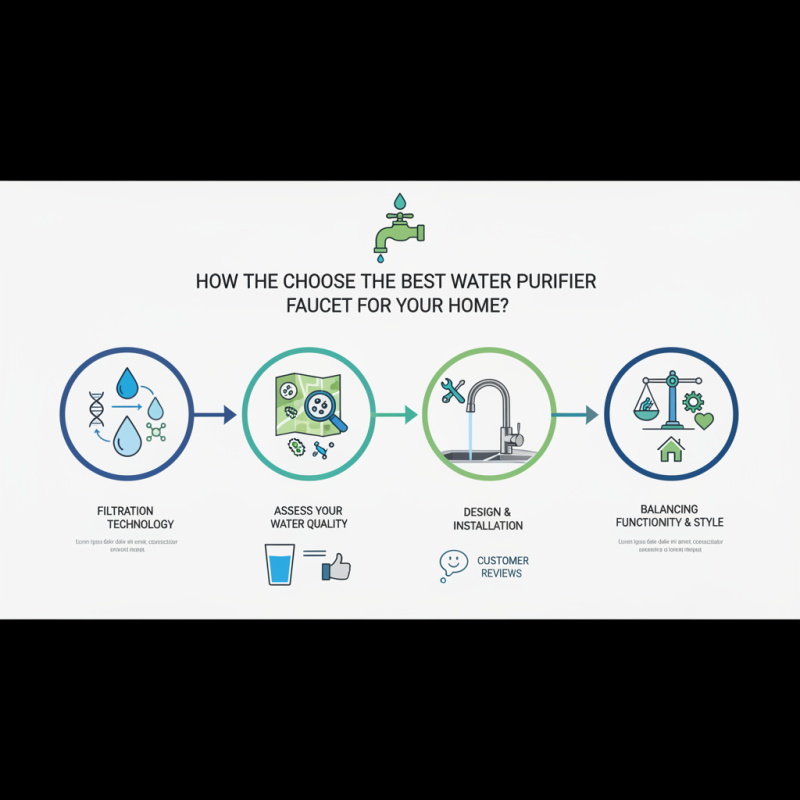
When selecting a Water Purifier Faucet, consider your specific needs. Different models offer various filtration technologies. Some target chemicals, while others focus on sediments and bacteria. It's important to assess the water quality in your area. This helps to determine what contaminants to remove.
Additionally, the design and installation process should not be overlooked. Some faucets might not fit well with your kitchen aesthetic. Researching customer reviews can also provide valuable insights. It’s necessary to reflect on your preferences to find the most suitable option. Balancing functionality and style is key for making a reliable choice.
Understanding the Different Types of Water Purifier Faucets
When choosing a water purifier faucet, understanding the different types is essential. There are mainly three types:
reverse osmosis, activated carbon, and UV light purifiers. Each has its unique benefits and drawbacks.
Reverse osmosis systems remove heavy metals and contaminants, providing nearly pure water. However, they can waste a lot of water and may require frequent filter changes.
Activated carbon faucets, on the other hand, are excellent at removing chlorine and improving taste. Yet, they may not eliminate all pathogens. They often need regular maintenance to ensure optimal performance.
UV purifiers kill bacteria and viruses effectively. However, they do not remove other pollutants and rely on electricity to function. This could be a concern during power outages.
Choose a water purifier faucet carefully. Evaluate your local water quality and your household needs. Remember, a perfect solution doesn't exist. There will always be trade-offs. What may work for one family might not fit another’s requirements.
Regularly reflect on the performance of your chosen faucet and be open to switching if necessary. Each type has its complexities, and understanding these can lead to better decision-making.
Evaluating Your Water Quality Needs for Optimal Filtration
Understanding your water quality needs is crucial for optimal filtration. Many homes may not know the specific contaminants in their water supply. A report by the Environmental Protection Agency (EPA) shows that 13% of community water systems exceed at least one health-based standard. This calls for careful evaluation before choosing a water purifier faucet.
Chemical contaminants, like chlorine and lead, require different filtration systems. A 2022 Water Quality Association study indicates that 48% of households face issues with these pollutants. Testing your water is essential to determine what you need to filter effectively. Simple at-home test kits can identify common contaminants. Yet, some users find them unreliable and confusing.
Consider the taste, clarity, and smell of your water. These indicators can hint at potential issues, though not all problems are visible. A survey on consumer awareness found that 79% of Americans underestimate the importance of regular water testing. Your choice of a water purification system should align with these findings. Rely on data and expert advice to make informed decisions.
Key Features to Consider When Selecting a Water Purifier Faucet
When selecting a water purifier faucet, several key features should be prioritized. First, consider the filtration technology. Common options include reverse osmosis, UV purification, and carbon filters. Each technology offers unique benefits and may suit different needs. For instance, reverse osmosis is excellent for removing heavy metals, while UV purification effectively kills bacteria.
Next, look into the faucet design. Check the material quality—stainless steel options are durable and resistant to corrosion. A sleek design can enhance your kitchen aesthetics. Also, consider the faucet’s size and spout height, ensuring it fits your sink without excessive splashing.
Tips: Evaluate your daily water consumption. If your household uses a lot of water, choose a model with a higher flow rate. Also, think about maintenance needs. Some systems require frequent filter changes, leading to additional costs.
Moreover, pay attention to certifications. Look for faucets that meet safety and efficiency standards. This ensures you’re investing in a reliable product. Check reviews to understand user experiences with installation and performance.
Remember to reflect on how often you'll use the faucet. If it's only for occasional use, a less complex model might suffice. It's essential to align the faucet’s capabilities with your actual needs to avoid overpaying for features you might never use.
Comparing the Costs of Popular Water Purifier Faucets
Choosing the right water purifier faucet can be challenging. The market offers a wide range of options, each varying in cost and features. Some models promise advanced filtration, while others focus on design. It’s essential to evaluate what fits best for your home.
When comparing costs, consider your budget versus the features offered. Basic models might cost less but may not provide the best filtration. Higher-end faucets often offer more advanced technologies, which might be a smarter investment in the long run. Analyze your family’s water needs before making a decision.
**Tip: Research online reviews and testimonials.** They provide insights into the product’s performance. Speak with professionals if unsure about filtration needs.
**Tip: Keep maintenance costs in mind.** Some faucets may have higher replacement filter prices, which can add up. Rethink your priorities and determine what is truly essential for your household. Balancing cost and quality is crucial for long-term satisfaction.
How to Choose the Best Water Purifier Faucet for Your Home? - Comparing the Costs of Popular Water Purifier Faucets
| Faucet Type |
Filtration Method |
Price Range (USD) |
Filter Lifetime (Months) |
Installation Ease |
| Reverse Osmosis Faucet |
Reverse Osmosis |
$150 - $300 |
6-12 |
Moderate |
| Activated Carbon Faucet |
Activated Carbon |
$50 - $150 |
3-6 |
Easy |
| Ultraviolet Faucet |
Ultraviolet Light |
$100 - $250 |
12 |
Moderate |
| Distillation Faucet |
Distillation |
$200 - $400 |
24 |
Difficult |
Installation and Maintenance Tips for Your Water Purifier Faucet
When it comes to installing a water purifier faucet, careful attention is crucial. Begin by locating a suitable area near your kitchen sink. Ensure there’s enough countertop space for the faucet and that it’s easy to reach. Use a level to keep the faucet straight during installation. If you're not confident in your DIY skills, consider consulting a plumbing professional. Their expertise can prevent potential mishaps.
Maintenance is equally important for the longevity of your water purifier faucet. Regularly check for leaks around the connections. Inspect the filters frequently. Over time, they can become clogged and reduce water flow. Most filters need replacement every six months. However, if you notice any signs of contamination or changes in taste, replace them earlier. Keep a maintenance schedule to help you stay on track. Even small lapses can lead to greater issues down the line.
Conclusion
When choosing the best Water Purifier Faucet for your home, it is essential to understand the various types available, each offering different levels of filtration and suitability for your needs. Evaluating your water quality helps determine the optimal filtration system you require, ensuring you select a faucet that meets your specific standards.
Key features to consider include the faucet's filtration capacity, installation ease, and maintenance requirements. Comparing costs among popular models can guide you in making an economical choice without compromising on quality. Lastly, proper installation and ongoing maintenance are crucial for the efficient functioning of your Water Purifier Faucet, guaranteeing you and your family access to clean, safe drinking water.

 Huazhu