Finding the best factory faucet handles in China takes more than comparing prices or polished product photos. Buyers need to check materials, machining quality, finish consistency, and the supplier’s ability to meet clear specifications. A Factory Faucet Handle may look simple, but its fit, surface, and feel can affect installation and everyday use. Small details matter.
A reliable search starts with practical questions. Does the factory provide material data, dimensional drawings, and samples? Can its team explain how it checks plating thickness, thread accuracy, and handle movement? Ask about minimum order quantities, lead times, packaging, and how defects are handled. Then compare written answers, not just sales claims. Request a sample and inspect its edges, color, weight, and connection points under ordinary light. Test the fit with the intended valve where possible. It can be revealing.
China has a broad network of faucet and plumbing-product manufacturers, but capability varies by factory. Some specialize in standard designs; others support custom shapes, finishes, or branding. A supplier’s catalog alone does not prove production capacity, so seek current factory information and references that can be independently checked. Clear drawings and a signed sample can reduce misunderstandings, though they cannot remove every risk. I would also leave room for a second sample review; early assumptions are sometimes wrong. The sections ahead explain where to look, how to assess manufacturers, and which questions help distinguish a dependable partner from an attractive listing.
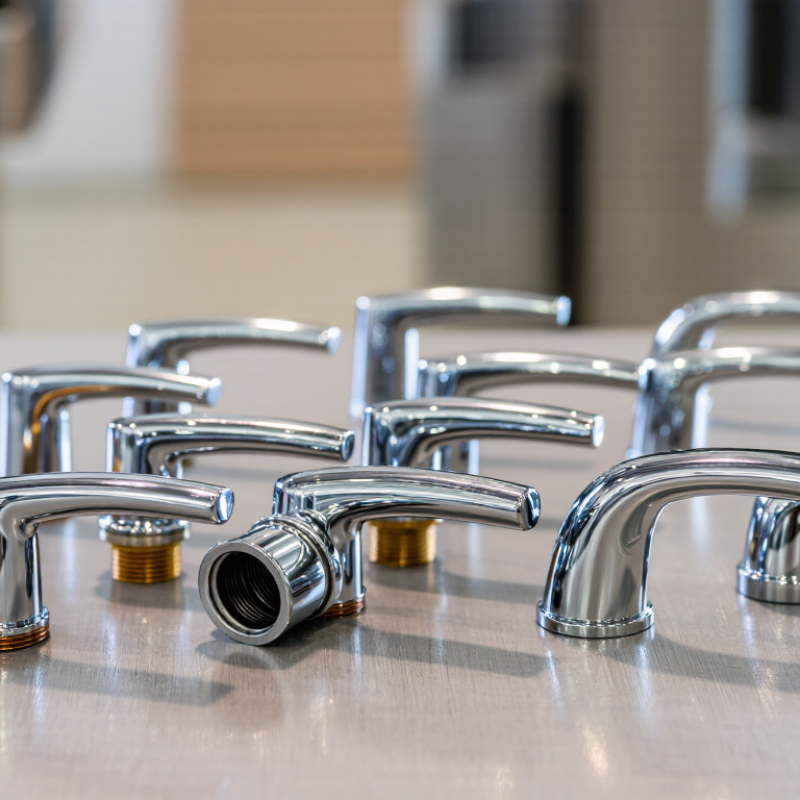
Faucet handles differ in shape, movement, and installation needs. Lever handles are easy to grip, while cross handles suit a more traditional look. Knob handles save space but can be harder to turn with wet hands. Before ordering, confirm the valve type, mounting dimensions, and whether the handle must fit a specific cartridge or stem. Small mismatches matter. A sample that looks right may still wobble after installation.
Tips: Ask for a dimensioned drawing and a working sample. Check the handle’s finish, edge smoothness, and movement through several turns. Keep one sample for comparison during production.
When evaluating a factory in China, discuss material and process requirements in plain terms. Zinc alloy, brass, and stainless steel each affect weight, machining, and cost. Request details on surface preparation, plating or coating thickness, and inspection criteria. Ask how the factory checks fit and finish across a production batch, not just on a showroom sample. Photos help, but they cannot reveal every issue. A clear written specification reduces guesswork, though some details may still need adjustment after testing. A careful supplier should explain what can be controlled consistently and what needs a trial run.
China’s faucet-handle suppliers are concentrated in several plumbing and hardware clusters, not one single city. Yuhuan, in Zhejiang, is known for metal valves and plumbing components, making it a practical starting point for machined handles. Nearby Taizhou-area workshops may offer turning, polishing, and component sourcing within a relatively compact network. Still, capabilities vary.
In Guangdong, Kaiping’s Shuikou town has a dense sanitary-faucet industry, with manufacturers and supporting suppliers close together. This can simplify sampling and coordination for buyers seeking finished handles or matching faucet parts. Foshan is another useful stop for broader bathroom-product sourcing, though handle specialization should be confirmed directly. Not every supplier does.
Nan’an in Fujian also has a substantial plumbing and sanitary-ware supply base, including hardware-related producers. Its suitability depends on handle material, finish, and order volume.
When comparing regions, request drawings, material specifications, finish samples, and inspection records instead of relying on a city’s reputation. Check how the supplier controls plating thickness, thread dimensions, and color consistency across batches. The regional map is not perfectly neat: some suppliers outsource finishing, which can affect lead times and consistency. A factory visit or live video walkthrough can clarify who handles each process.
To find factory suppliers for faucet handles in China, start with established B2B sourcing platforms, plumbing trade fairs, and regional manufacturing directories. Search by product details, such as zinc-alloy handles, brass handles, lever shapes, or specific surface finishes. A supplier’s product page is only a lead, not proof of factory ownership. Ask whether the company makes the handle in-house or outsources casting, machining, and plating. Details matter.
Shortlist suppliers against a written specification. Include dimensions, material grade, finish, mounting method, and expected order quantity. Request a recent factory video showing the production floor, inspection tools, and packaging area. Ask for a sample made to your drawing, then check its weight, edges, fit, and finish under bright light. Ask for evidence. A neat sample may not match a full production run, so confirm how batches are inspected and how defects are recorded.
Compare responses, not just prices. Reliable suppliers usually answer technical questions clearly and provide consistent measurements, lead times, and sample terms. Request a quotation that separates tooling, sampling, unit price, and packaging costs. Verify the registered business information and payment details through appropriate independent checks. It is easy to overvalue polished catalogs; I would give more weight to traceable production details. Some checks take time, and even a careful shortlist cannot remove every risk.
Where to Find the Best Factory Faucet Handles in China?
Assess a factory by its process, not only its showroom. Ask how handles move from raw material to finished product. A capable team should explain its machining, polishing, surface treatment, and inspection steps clearly. Look for organized workstations, labeled material batches, and measuring tools near the production line. Ask to see recent inspection records for dimensions, surface finish, and handle operation. Specific answers matter. Vague promises do not.
Tips: Request a sample made with the same materials and finish as your intended order. Check its edges, coating consistency, and movement by hand. Ask about monthly capacity, lead times, and how defects are recorded. Compare the answers with production records where possible.
A factory visit can reveal useful details, but one visit has limits. A tidy line on inspection day may not show routine conditions. Ask to observe a normal production run, and speak with staff who handle quality checks. Confirm that the factory can trace a sample back to its material batch and work order. I would avoid judging capability by equipment alone; good machines still need skilled operators and steady controls. Some details may remain unclear, so record open questions and verify them before placing a large order.
| Assessment Dimension | What to Check | Useful Evidence | Strong Indicator |
|---|---|---|---|
| Factory identity and production scope | Confirm the production site, the processes performed in-house, and any processes handled by subcontractors. | Live video walkthrough or site visit; process flow; equipment list; subcontractor disclosure. | The facility can explain who performs casting, machining, finishing, assembly, and inspection for the specific handle. |
| Material control | Check the specified handle material, incoming-material identification, and how different material grades or batches are kept distinguishable. | Material specifications; supplier documents; incoming inspection records; batch or lot labels. | Material claims are supported by traceable records and match the approved drawing or purchase specification. |
| Manufacturing capability | Assess whether available processes suit the handle design. Depending on design and material, production may involve casting, forging, stamping, machining, polishing, or molding. | Process flow; relevant machine list; sample parts; tooling and maintenance records. | The factory describes process limits, critical dimensions, and how it controls repeatability rather than relying only on general capability claims. |
| Dimensional and functional checks | Review checks for mounting interfaces, fit, movement, and compatibility with the intended faucet assembly. | Approved drawings; inspection plan; measurement records; assembly or fit-test samples. | Inspection points and acceptance criteria are documented and tied to the current drawing revision. |
| Surface finish and appearance | Evaluate finish consistency, visible defects, color variation, edges, and polishing quality under agreed inspection conditions. | Approved finish sample; visual inspection standard; defect classification; batch inspection records. | The buyer and factory agree on a reference sample and a written method for assessing appearance before production. |
| Coating and corrosion testing | For coated or plated handles, identify the coating process and verify that any corrosion test uses an agreed method and acceptance criteria. | Coating specification; test report with method and exposure conditions; report traceability to the tested sample or batch. | Reports clearly state what was tested and do not treat a test method alone as proof of a particular service life. |
| Quality management and inspection | Check how incoming, in-process, and final inspections are planned, recorded, and followed up when defects occur. | Inspection procedures; sample records; nonconformance and corrective-action records; calibration records for measuring equipment. | Records show defined responsibilities, traceable results, and documented action for identified problems. |
| Production capacity and scheduling | Compare the requested quantity and delivery schedule with available equipment, staffing, current workload, and production steps. | Capacity explanation by process; production schedule; bottleneck analysis; recent output records where available. | Capacity commitments are explained using the actual production route and include time for inspection and rework when needed. |
| Sample and change control | Confirm that production will follow the approved sample, specifications, and drawing revision, and that changes require review. | Signed or otherwise identified reference sample; version-controlled drawings; written change-approval procedure. | The factory can link the approved sample and documents to the production order and notify the buyer before relevant changes. |
| Packaging and shipment protection | Check how handles are protected from scratches, moisture, and movement during storage and transport. | Packaging specification; packed sample; carton markings; pre-shipment inspection records. | Packaging is agreed for the product finish and shipping conditions, and the packed goods can be traced to the order or batch. |
| Certificates and claims | Verify the issuer, validity, scope, site, and product coverage of any certificates or test reports presented. | Original or verifiable certificate details; issuing-body records; report number and tested-product description. | Claims are limited to the documented scope; a management-system certificate is not presented as product approval. |
| Communication and corrective action | Assess response quality on specifications, defects, delivery risks, and corrective actions. | Written answers to a technical questionnaire; sample issue log; corrective-action example with cause and follow-up. | Responses are specific, documented, and consistent across sales, engineering, and quality contacts. |
Assessment note: Use the same drawings, finish samples, inspection criteria, and order assumptions when comparing factories. Applicable test methods and acceptance limits should be agreed with the buyer and matched to the product and destination market.
Choosing a factory-direct partner for faucet handles takes more than comparing quoted prices. Check whether each supplier makes the parts in-house or relies on outside workshops. Ask for a clear breakdown of materials, finishing steps, and inspection standards. Details matter. A handle may look identical in a catalog but feel different in the hand.
Request samples in the finish and material you plan to order. Examine the edges, mounting threads, and coating under bright light. Ask how the factory checks color consistency across production batches, and whether it can share inspection records. A polished sample can still hide production weaknesses. It is easy to underestimate that gap. Confirm sample lead time, minimum order quantity, and how defects are handled before discussing volume.
Communication is another useful comparison point. Send the same technical questions to several suppliers, then note how clearly they answer. Do they explain tolerances, packaging, and customization limits, or only promise flexibility? Ask for dated production photos or a video call from the workshop; neither replaces an audit, but both can clarify capacity. A low price may suit a simple project, while stable finishes and responsive support may matter more for repeat orders. No checklist removes every risk, so leave room to reassess after the first batch.
Compare suppliers before choosing a factory-direct partner
These illustrative 1–5 priority scores are a buyer’s evaluation framework, not measured supplier ratings or market statistics. Request verifiable specifications, test records, compatibility details, quotations, and delivery commitments from each factory.
Check the valve type, mounting dimensions, material, finish, and cartridge or stem fit. Small mismatches matter.
Lever handles are easy to grip. Cross handles look traditional, while compact knobs can be harder to turn with wet hands.
Ask for a dimensioned drawing and a working sample. Turn it several times, inspect its edges, and check for wobbling.
Ask who handles casting, machining, and plating. Request a recent factory video showing production, inspection tools, and packaging.
Zinc alloy, brass, and stainless steel differ in weight, machining needs, and cost. Ask for the material grade.
Review inspection records for dimensions, finish, and handle movement. Look for labeled material batches and measuring tools near the production line.
Request separate prices for tooling, samples, units, and packaging. Compare lead times and sample terms too.
Not by itself. A tidy line on one day may not reflect routine conditions; ask to observe a normal run.
Feel the edges, inspect coating under bright light, and test the fit by hand. I may still miss something, so keep the sample for comparison.
Finding the best Factory Faucet Handle supplier in China starts with understanding the handle types you need, the materials and finishes required, and the technical standards your project must meet. China’s manufacturing landscape includes several established production regions, each with different strengths in product variety, component sourcing, and production scale. Knowing these differences can help you focus your search and create a practical shortlist of factory suppliers.
Before choosing a factory-direct partner, assess each supplier’s manufacturing equipment, quality-control procedures, customization capabilities, production capacity, and communication process. Request clear product specifications and samples, then compare pricing, lead times, consistency, and service rather than relying on cost alone. A structured evaluation helps you identify a factory that can meet your design and volume needs while supporting reliable production over the long term.
