Sourcing faucet handles across borders looks simple until a sample arrives with the wrong thread. To Source Faucet Handle successfully, buyers need more than a low quotation. They need verified dimensions, stable materials, clear finishes, and suppliers who communicate honestly. A handle may look polished under showroom lights, yet fail after repeated turns, humidity, or aggressive cleaning. Purchasing teams often face small details that create expensive delays: a 35 mm cartridge opening mistaken for 40 mm, or a brushed finish that changes between batches. These are not dramatic failures. They are common purchasing risks.
This guide presents seven practical tips for global sourcing, from defining technical specifications to checking factory capability and shipment readiness. It considers stainless steel, zinc alloy, brass, ceramic details, plating quality, packaging, and replacement support. Product drawings should show hole spacing, thread size, tolerances, weight, and surface treatment. Samples deserve hands-on testing, not only photographs. Ask for material reports, inspection records, and realistic production timelines. A video factory tour helps, but it is not proof by itself. Independent inspections can reveal uneven plating, loose inserts, or weak cartons before departure. Supplier selection also requires attention to communication, payment terms, delivery responsibilities, and applicable product standards in the destination market. Mistakes still happen. A sensible process leaves room for correction, retesting, and better questions. Reliable sourcing is built through evidence, not attractive promises.
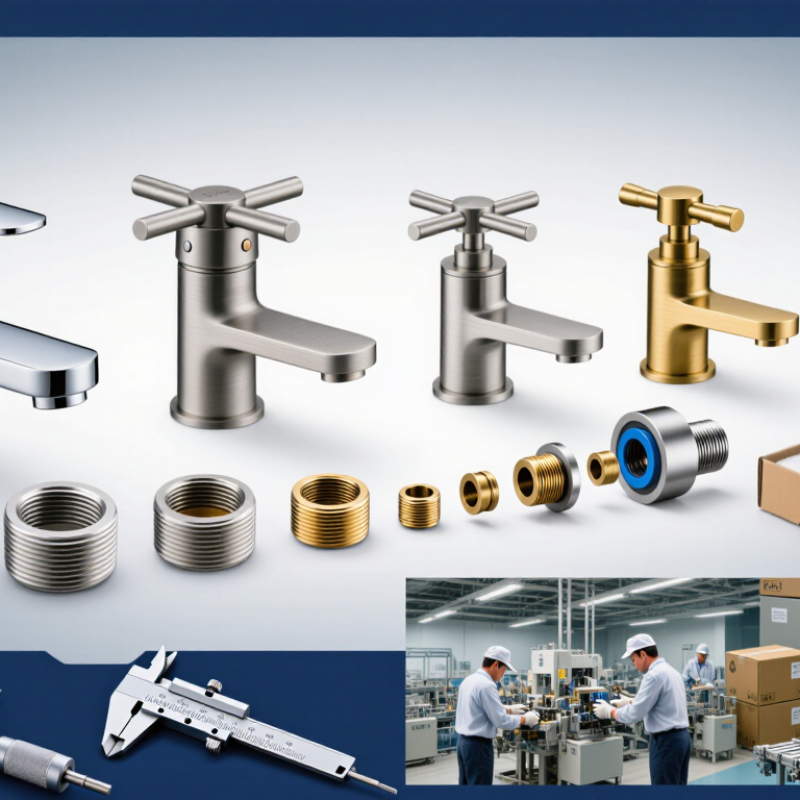
Before contacting overseas suppliers, write a practical faucet handle brief. Specify the material, finish, dimensions, thread type, mounting method, and expected service life. Add clear photos or a simple technical drawing. A handle that feels solid in a showroom may fail after repeated wet-hand use.
Tip 1: Match the handle to your target market. Residential buyers may prefer smooth operation and warm finishes. Commercial users often need stronger parts, easy cleaning, and quick replacement. Consider local water conditions, common sink designs, climate, and installation habits. These details can change the correct specification.
My early sourcing briefs were too general. “Modern and durable” sounded useful, but suppliers interpreted those words differently. Now, I request measurable details, such as torque range, coating thickness, salt-spray performance, and dimensional tolerance.
Tip 2: Ask for production samples before placing a large order. Test the handle with real fittings, wet hands, gloves, and repeated rotations.
Review supplier drawings carefully, including hidden washers, screws, and contact surfaces. Request material declarations and relevant test records. Check whether the documents match the actual sample.
Tip 3: Keep a comparison sheet for every supplier. Record sample weight, movement, finish consistency, packaging quality, lead time, and observed defects. One weakness remains: laboratory results cannot fully predict customer behavior, so field feedback still matters.
Global faucet-handle sourcing requires more than comparing unit prices. Reliable suppliers usually show stable production records, clear material specifications, and repeatable quality controls. Request factory audits, recent test reports, and samples from the same production line. Check brass, stainless steel, zinc alloy, plating thickness, thread accuracy, and corrosion resistance. Small defects become expensive after installation.
Tip 1: Map suitable manufacturing regions by capability, not reputation alone. China and Vietnam often offer broad component networks and flexible production volumes. India can support metal-processing programs, while Germany and Italy may suit highly engineered or design-focused components. Use the World Bank’s 2023 Logistics Performance Index to compare customs, infrastructure, tracking, and delivery reliability. A high score helps, but it never replaces an audit.
Tip 2: Verify suppliers through trade evidence. The International Trade Centre’s Trade Map can help review export activity under relevant HS codes, including valve and component categories around HS 8481. Compare shipment consistency, destination markets, and product descriptions. Ask for three customer references. Then test a pilot order. No score is perfect. A supplier may pass an audit yet miss a production deadline. Build inspection checkpoints before plating, after assembly, and before packing. Keep written tolerances, packaging photos, and corrective-action records. These details make global sourcing measurable, rather than hopeful.
Tip 1: Compare materials before requesting prices. Brass handles offer weight and easy machining, while stainless steel resists corrosion in humid bathrooms. Zinc alloy can reduce costs, but its finish needs careful testing. I once accepted a low quotation without checking wall thickness. The samples looked similar. They were not. Request material certificates, coating data, and salt-spray results. Inspect threads, edges, and cartridge compatibility. Tiny defects can become installation complaints.
Tip 2: Match the design with the target market and production method. A slim lever may suit modern projects, but sharp transitions increase polishing time. Cross handles require consistent alignment. Ask for 2D drawings, 3D files, color standards, and a physical approval sample. Compare minimum order quantities and tooling charges separately. A cheaper mold is not always cheaper. Rework can erase the saving. Keep revision records and confirm every dimensional change.
Tip 3: Compare total costs and production capabilities, not unit prices alone. Add packaging, inspection, freight, spare parts, and payment terms. Ask how many pieces the factory can produce weekly. Verify that claim through recent records or a pilot order. Review casting, machining, plating, assembly, and final inspection capabilities. I still leave room for uncertainty. Forecasts change. Build a small trial batch before scaling. This can reveal delays, finish variation, and hidden labor costs.
7 Tips to Source Faucet Handles Globally
Verify quality before negotiating price. The WHO/UNICEF Joint Monitoring Programme reported that 2.2 billion people lacked safely managed drinking water in 2022. Faucet components therefore need careful material and contamination checks. Tip 1: Request alloy composition, coating thickness, and corrosion-test records. Tip 2: Match the handle and cartridge with destination standards, such as NSF/ANSI/CAN 61, EN 817, or ASME A112.18.1/CSA B125.1. Requirements differ by market.
Tip 3: Order production samples, not showroom pieces. Check thread fit, surface defects, handle force, and repeated operation. A sample can pass while mass production fails. That uncomfortable possibility deserves attention. Tip 4: Use an ISO/IEC 17025-accredited laboratory for independent testing. Tip 5: Confirm certificates through the issuing body, and inspect the certificate scope, validity, and factory address. The ISO Survey 2022 recorded more than 1.2 million ISO 9001 certificates worldwide, but certification alone does not guarantee consistent batches.
Tip 6: Audit supplier credentials beyond documents. Review business registration, manufacturing equipment, quality staff, traceability records, and recent inspection results. Ask for batch codes and retain sealed samples. Tip 7: Write measurable acceptance terms into the purchase contract. Define allowable coating variation, leakage limits, packaging conditions, and corrective-action deadlines. Global shipping adds risk. Transit humidity, mixed cartons, and rushed inspections can expose weak controls. I once treated a polished sample as sufficient evidence; it was not. Supplier verification must continue after the first shipment.
| No. | Sourcing Tip | Key Data Dimension | Verification Action | Relevant Standard or Requirement | Sample and Evidence to Request | Acceptance Indicator |
|---|---|---|---|---|---|---|
| 1 | Define the application before requesting quotations | Installation type, operating environment, user market, and compatible valve cartridge | Prepare a technical brief covering handle dimensions, mounting interface, material, finish, temperature exposure, and intended faucet type. | Use the plumbing requirements applicable in the destination market. Common references include ASME A112.18.1/CSA B125.1 and EN 817 where applicable. | 2D drawing, 3D model, material declaration, dimensional tolerance sheet, and compatibility statement. | The supplier confirms every critical dimension and identifies any design assumption before quoting. |
| 2 | Compare materials and corrosion resistance | Base material, coating system, plating thickness, salt resistance, and chemical exposure | Check whether the handle is made from stainless steel, brass, zinc alloy, aluminum, engineering plastic, or a combination. Confirm the complete coating stack. | Specify a recognized corrosion test method, such as ASTM B117 or ISO 9227, with the exposure period defined by the product risk level. | Material certificate, coating process description, adhesion test result, finish sample, and corrosion-test report from an independent laboratory when required. | No blistering, peeling, red rust, significant discoloration, or loss of adhesion beyond the agreed specification. |
| 3 | Verify applicable health and chemical requirements | Lead, restricted substances, extractables, and contact with drinking-water components | Determine whether the handle or its fasteners can contact potable water. Separate decorative-only components from wetted components in the compliance review. | For potable-water applications, review NSF/ANSI/CAN 61 and NSF/ANSI/CAN 372 where applicable. Review REACH or other destination-market chemical rules as required. | Current test reports, restricted-substance declaration, supplier material composition, and evidence that reports match the offered material and finish. | Documentation identifies the tested material, model or drawing revision, laboratory, test date, and applicable market. |
| 4 | Order samples before approving production | Dimensional accuracy, appearance, ergonomic feel, assembly fit, and finish consistency | Request production-representative samples, not only hand-finished prototypes. Install them on the intended cartridge or test fixture. | Use the approved drawing, golden sample, and written inspection specification as the control documents. | Recommended initial review: at least 3 samples from the same intended production process and 1 sealed reference sample retained by the buyer. | All samples fit correctly, operate smoothly, match the approved appearance, and remain within drawing tolerances. |
| 5 | Test mechanical durability and operating performance | Actuation force, looseness, wear, torque transfer, cycle life, and fastener retention | Create a test plan based on the cartridge design and expected use. Test the handle together with the actual mounting hardware. | Reference the mechanical and endurance requirements of the applicable faucet standard, such as EN 817 or ASME A112.18.1/CSA B125.1. | Test method, number of cycles, applied load or torque, preconditioning, failure definition, and signed test results. | No cracking, unacceptable wobble, stripped interface, coating failure, or functional loss during or after the agreed test. |
| 6 | Audit supplier credentials and production controls | Legal identity, manufacturing location, quality system, process capability, and traceability | Confirm the actual production site, review the quality manual, inspect incoming-material controls, and verify corrective-action records. | ISO 9001 certification is useful for quality-system verification, but it does not replace product testing or regulatory approval. | Business registration, factory address, certification scope, audit report, process flow, inspection plan, calibration records, and batch-traceability example. | The certificate scope covers the relevant manufacturing activity, the factory information is consistent, and records can be independently verified. |
| 7 | Control pre-shipment quality and documentation | Defect rate, inspection level, packaging, labeling, lot identification, and change control | Approve a written quality agreement defining sampling, critical defects, major defects, minor defects, rework, and notification of material or process changes. | Use an agreed acceptance sampling plan, such as ISO 2859-1, with the inspection level and AQL values stated in the purchase contract. | Pre-shipment inspection report, dimensional records, appearance photos, carton test details, packing list, lot code, and certificate of conformity. | Shipment matches the approved sample and specification, required documents are complete, and each production lot is traceable. |
Note: Standards and regulatory requirements vary by destination market, faucet design, and whether components contact potable water. Confirm the current edition and scope with the relevant certification body or testing laboratory before purchase.
Global faucet-handle sourcing begins with shipping details, not just unit prices. Request carton dimensions, gross weight, pallet counts, and production lead times before approving a supplier. A small handle may seem inexpensive, yet oversized cartons can raise freight costs sharply. Ask whether sea, air, or rail service suits your replenishment schedule.
Customs planning needs equal attention. Confirm the correct tariff classification with a qualified customs professional, because handle materials and construction can affect duty treatment. Prepare commercial invoices, packing lists, origin documents, and product specifications early. Do not rely on informal descriptions such as “metal parts.” They may create delays or unexpected charges. I would also calculate landed cost, including freight, insurance, duties, brokerage, storage, and inland delivery.
Long-term procurement terms should protect both sides. Set quality tolerances, approved materials, packaging requirements, inspection procedures, replacement rules, and delivery windows in writing. Negotiate price reviews for metal costs and currency changes, but avoid vague adjustment clauses. A twelve-month forecast can support stable production, while smaller scheduled releases reduce warehouse pressure. Keep safety stock for port congestion or factory maintenance. It helps.
One practical warning: spreadsheets are not always reliable. A missed customs fee or incorrect carton measurement can distort the entire sourcing decision. Test a small shipment first, record actual delivery time and clearance costs, then revise the purchasing model. Recheck supplier capacity before signing a long-term agreement. A low price is useful only when the shipment arrives predictably and meets the required standard.
Typical planning time by stage for an international faucet-handle procurement project.
Planning benchmark: supplier qualification and sampling usually require several weeks, while production, ocean freight, customs clearance, and inland delivery can extend the total cycle to roughly 60–90 working days. Confirm tariff classification, country-of-origin rules, inspection requirements, payment terms, forecast volumes, safety stock, and reorder conditions before signing a long-term supply agreement.
Specify material, finish, dimensions, thread type, mounting method, and expected service life. Add photos or a simple technical drawing. Avoid vague terms like “modern” or “durable.”
Residential users may prefer smooth movement and warm finishes. Commercial users often need stronger parts, easy cleaning, and fast replacement. Local water conditions and sink designs also matter.
Request production samples from the intended manufacturing line. Test them with wet hands, gloves, and real fittings. Rotate each handle repeatedly. Test it wet.
Check material declarations, thread accuracy, coating thickness, corrosion resistance, and dimensional tolerance. Inspect hidden washers, screws, and contact surfaces. Small defects can become expensive after installation.
Use one comparison sheet for every supplier. Record sample weight, movement, finish consistency, packaging, lead time, and defects. Factory audits help, but they are not perfect.
Compare capability, production volume, logistics, and component networks. Do not rely on reputation alone. Review export evidence and request customer references. Then place a pilot order.
Ask for carton dimensions, gross weight, pallet counts, and production lead time. Compare sea, air, or rail options with your replenishment schedule. A small handle can create high freight costs inside oversized cartons.
Include freight, insurance, duties, brokerage, storage, and inland delivery. Confirm tariff treatment with a qualified customs professional. Test a small shipment before building a long-term model. Spreadsheets can mislead.
To Source Faucet Handle products globally, begin by defining your technical requirements, preferred styles, target customers, order quantities, and expected market standards. A clear brief helps you identify suitable manufacturing regions and reliable suppliers more efficiently. Compare materials such as stainless steel, brass, zinc alloy, and engineered composites, while also reviewing design options, surface finishes, production capacity, lead times, and total pricing. This process allows you to balance appearance, durability, functionality, and cost before making a purchasing decision.
Before committing to an order, request samples and verify product quality, testing procedures, certifications, factory experience, and supplier communication. Evaluate packaging, inspection processes, and consistency between samples and mass production. You should also calculate shipping charges, import duties, customs requirements, insurance, and other landed costs. Finally, discuss payment terms, minimum order quantities, delivery schedules, replacement policies, and long-term cooperation plans to establish a stable and transparent global procurement strategy.
