A good faucet handle should feel obvious before the water even runs. It should turn smoothly, resist wobbling, and let you find a comfortable temperature without repeated adjustments. The best Hot Cold Faucet Handles also suit the sink’s style, installation type, and daily demands. Small details matter. A slippery knob can feel awkward with wet hands, while a stiff lever can make precise adjustments frustrating.
Water performance matters, too. The U.S. Environmental Protection Agency’s WaterSense faucet specification sets a maximum flow rate of 1.5 gallons per minute for labeled bathroom sink faucets. That offers a useful efficiency benchmark, though flow rate alone cannot tell you whether a handle feels dependable or comfortable. This guide compares seven options through practical factors such as grip, material, control, compatibility, and ease of installation. It also looks for clear product information, because attractive photos do not prove a handle will fit your faucet.
One limitation deserves a mention: no source articles or verified expert quotation were provided, so I won’t invent a named specialist’s words. That matters. Instead, the recommendations should be checked against manufacturer specifications and credible guidance, including WaterSense. A handle can look perfect online and still disappoint at the sink. The comparison ahead aims to make those trade-offs easier to see.
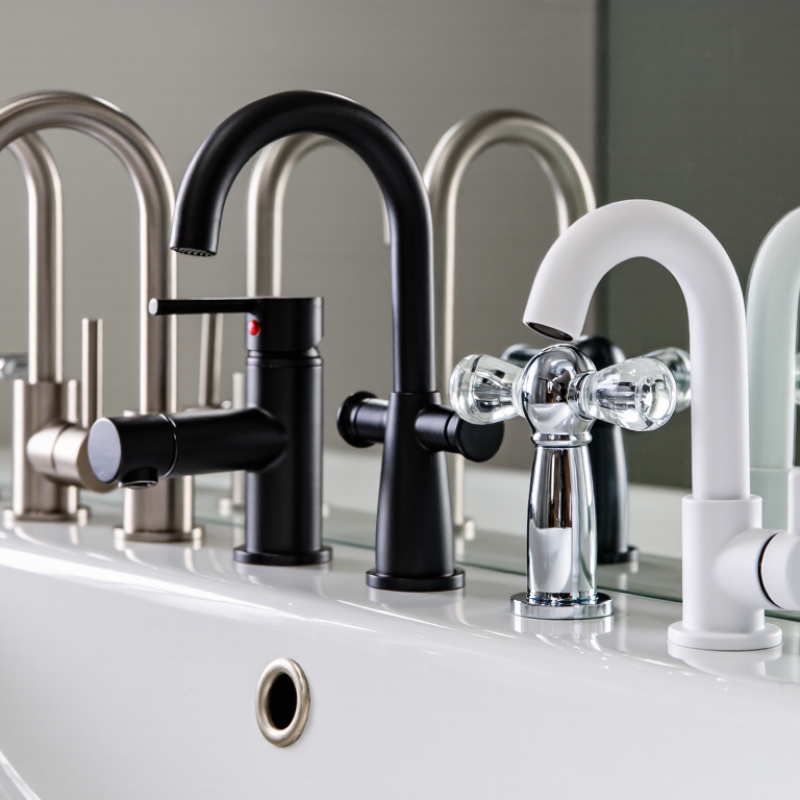
Hot-and-cold faucet handles regulate two things: water volume and temperature. On a traditional two-handle faucet, each handle opens a separate valve. Turning the hot handle farther increases hot-water flow; adjusting the cold handle changes the blend at the spout. Small turns matter. A few degrees of handle movement can make water noticeably warmer, especially when household water pressure shifts.
Many modern faucets use ceramic-disc cartridges to control flow with smooth, gradual movement. The handles still set the mix, but worn cartridges, mineral buildup, or uneven supply pressure can make adjustment feel jumpy. The U.S. Environmental Protection Agency’s WaterSense program sets a maximum flow rate of 1.5 gallons per minute for labeled bathroom faucets, compared with the federal standard of 2.2 gallons per minute. Efficient flow can help conserve water without requiring a different handle technique. Still, a lower flow rate does not guarantee a stable temperature.
Tips: Open the cold handle, then add hot water slowly. Check the temperature with your hand before placing it under the stream. If the handle feels stiff or water temperature swings suddenly, inspect the aerator and cartridge; buildup can be easy to miss.
How handle styles control water flow and temperature
Two-handle configurations use separate controls for hot and cold water, which mix at the faucet. Single-lever and joystick configurations use one control to adjust both flow and temperature. The chart compares typical control counts—not quality or performance; exact designs vary by faucet model.
What Are the 7 Best Hot Cold Faucet Handles?
Which Handle Styles Fit Compression, Cartridge, Ball, and Ceramic-Disc Valves?
A handle’s shape does not guarantee a fit; the valve stem and mounting hardware matter more. Cross, round, lever, blade, knob, and teardrop handles can suit different faucet designs, while wrist-blade handles offer extra grip. For compression valves, separate cross or round handles are common. They turn several times as the stem presses a washer against its seat.
Cartridge valves often work with levers or knobs, but the stem connection varies. Ball valves usually use one lever to control temperature and flow. Ceramic-disc valves may have a lever or paired handles with a short, quarter-turn action. These are useful patterns, not perfect rules. Before buying, compare the old handle’s screw position, stem shape, and splines. A handle that looks identical can still wobble or refuse to seat.
Tips: Shut off the water before removing a handle. Keep the screw and adapter, and take the old handle to the hardware counter for comparison. If the stem is worn, replacing only the handle may not fix a loose feel. A small detail, but an easy one to miss.
A handle can look right online and still fail at the sink. Compare a short lever, long lever, cross handle, round knob, paddle, textured metal handle, and clear acrylic handle. Before choosing, check the valve stem shape, spline count, and mounting depth against the replacement handle. Also measure nearby backsplash clearance; a long lever may strike the wall when turned. Fit matters more than a matching photo.
Grip depends on who uses the faucet and whether hands are wet. Levers and paddles need little twisting, while compact knobs can be harder to turn with limited hand strength. Cross handles offer clear control, but their arms collect grime around the center. Finish changes upkeep: polished surfaces show water spots, while brushed textures hide them but can trap soap residue. Acrylic is easy to wipe, though it may scratch. Small details matter. I would not choose by appearance alone; I have overlooked clearance before, and the handle felt awkward every day. Check care instructions, then test the grip with damp fingers if possible.
| Handle option | Fit and compatibility | Grip and control | Common finish options | Maintenance considerations | Best suited for |
|---|---|---|---|---|---|
| 1. Standard lever handle | Available for many two-handle faucets, but the stem or cartridge shape, spline count, screw position, and handle adapter must match. | Easy to push or pull with one hand; generally offers good leverage and clear hot-to-cold adjustment. | Chrome, brushed nickel, stainless-look, and other finishes depending on the faucet. | Wipe with a soft cloth and mild soap. Avoid abrasive pads that can dull plated or coated surfaces. | Everyday use and users who prefer a simple, easy-to-operate grip. |
| 2. Cross handle | Must match the faucet’s stem connection and mounting arrangement; cross handles are not automatically interchangeable between faucet models. | Several gripping points can help when turning a tight valve, though small cross handles may be difficult for some users. | Often offered in chrome, polished finishes, and traditional-looking metal finishes. | Clean around the spokes and center cap, where mineral residue and soap can collect. | Traditional-style bathrooms and users who want a defined turning grip. |
| 3. Round knob handle | Check the handle’s stem or adapter compatibility and confirm that there is enough clearance around the faucet base or backsplash. | Compact and easy to understand, but usually requires a pinch or firm grasp and may be harder to turn with wet hands. | Common choices include chrome, brushed metal finishes, and matching faucet finishes. | The smooth shape is simple to wipe; inspect the base and any decorative cap for trapped water or buildup. | Compact sinks and installations where a small handle profile is useful. |
| 4. Blade or paddle handle | Available in different stem and adapter designs. Compare the replacement handle’s connection and clearance with the original before buying. | The broad surface can be operated with the palm or side of the hand, making it easier to use than a small knob for many people. | Typically matched to the faucet’s available finish, such as chrome or brushed metal. | Its broad surface is easy to wipe; clean the underside and pivot area where grime can accumulate. | Users seeking a broad, straightforward grip or a clean, modern profile. |
| 5. Wrist-blade handle | Check stem compatibility, handle length, and surrounding clearance. Longer handles may need more space to rotate freely. | The extended blade provides leverage and can often be moved with a wrist, forearm, or hand. | Commonly supplied to coordinate with the faucet body; finish availability varies by design. | Wipe the longer surface regularly and check the handle screw or pivot for looseness over time. | Utility sinks, shared spaces, and situations where hands-free-style operation is helpful. |
| 6. Lever handle with hot/cold index | Confirm the correct hot-side or cold-side handle and the matching stem connection; index-cap size and placement can vary. | Offers the familiar leverage of a lever, while a temperature marker helps identify each side. | Finish should coordinate with the faucet; index caps may be colored or marked separately. | Keep the index area clean and replace a loose or faded cap if the handle design allows it. | Two-handle faucets where clear hot and cold identification is important. |
| 7. Universal replacement handle kit | Usually includes adapters for selected stem types, but “universal” does not mean it fits every faucet. Compare the included adapters with the faucet stem and screw arrangement. | Grip depends on the handle style included in the kit; options may range from compact knobs to levers. | Finish choices vary; the replacement may not perfectly match an older or worn faucet finish. | Keep unused adapters and fasteners organized. Check the handle periodically to ensure the mounting screw remains secure. | Repairs when the original handle is unavailable, provided the stem connection can be matched. |
Fit note: Faucet handle compatibility depends on the valve stem or cartridge, spline pattern, adapter, mounting screw, and available clearance. Measure the existing parts and check the faucet’s documentation before ordering. Finish names and availability vary by product.
The 2010 ADA Standards set a practical limit for accessible faucet controls: operable parts must require no more than 5 pounds of force. This applies where the Standards govern and helps people with limited grip strength or wrist mobility. Controls must also work with one hand, without tight grasping, pinching, or twisting the wrist. Small details matter.
For hot-and-cold faucets, handle shape can make that requirement easier to meet. Lever handles, broad paddles, and loop-style handles offer different ways to apply pressure without pinching a small knob. Cross handles may be familiar, but some require a firm grip or wrist rotation. A handle that feels smooth in a showroom can still be awkward with wet hands. Test the movement, not just the appearance.
The 5-pound limit is a measurable benchmark, not a complete comfort test. Check that each control moves easily from a seated position and that hot and cold settings are clearly distinguishable. A plumber or accessibility professional can verify force and installation details for the specific setting. There is a catch: user needs vary, and a control meeting the force limit may still feel difficult for someone.
When comparing seven hot-and-cold faucet handle styles, start with the faucet’s certified flow, not handle shape. EPA WaterSense’s 1.5-gpm-at-60-psi benchmark applies to qualifying bathroom sink faucets. It describes flow at a specified pressure, not the exact amount every home will receive. Small details matter.
Separate handles allow independent temperature adjustment, but the valve, cartridge, aerator, and spout affect performance. Check that the handles match the faucet’s valve and mounting pattern. Lever, cross, and knob styles are not automatically interchangeable. Look for WaterSense labeling on the complete faucet, then confirm its stated flow rate and installation requirements. Check the fit.
Household pressure may differ from the 60-psi test point, so actual flow can vary. A marked container and timer can give you a rough basin-flow check, though this does not replace certification. Consider wet-hand grip, cleaning around the handle bases, and whether hot and cold markings are easy to read. The specification helps guide a pairing, but comfort and compatibility still deserve a real-world check.
One handle controls hot water, and the other controls cold water. Together, they adjust flow and temperature.
A few degrees of movement can noticeably change the hot-and-cold mix. Shifting water pressure may make the change feel stronger.
Open the cold handle, then add hot water slowly. Check the stream with your hand first.
Mineral buildup, a worn cartridge, or uneven supply pressure may cause sudden changes. Check the aerator too.
Check the valve stem shape, spline count, and mounting depth. Measure the backsplash clearance as well.
Levers and paddles need little twisting. Compact knobs can be harder to turn with wet or less-strong hands.
Polished finishes show water spots. Brushed textures hide them, but soap residue can collect. Acrylic wipes clean, though it may scratch.
No. Test the grip with damp fingers and check the care instructions. I have missed a clearance issue before; it felt awkward every day.
Hot Cold Faucet Handles do more than mark temperature; they work with a faucet’s internal valve to regulate water flow and blend hot and cold water. The right handle depends on the valve type: compression, cartridge, ball, or ceramic-disc designs may require different connections and movements. Comparing handle options means looking at compatibility first, then considering grip comfort, finish durability, and how easily each style can be cleaned or maintained.
For accessible operation, the 2010 ADA Standards set a maximum force of 5 pounds for faucet controls, making easy-to-operate handles an important consideration. When pairing handles with a faucet, also check the fixture’s flow performance: the EPA WaterSense specification of 1.5 gallons per minute at 60 psi offers a useful reference point. Together, these factors help narrow the choices to handles that fit properly, feel comfortable, and support practical, efficient everyday use.
