2026 Best Bulk Faucet Handle Suppliers for Global Buyers

Time:2026-09-18 Author:Oliver
0%

Choosing the right Bulk Faucet Handle supplier can shape product quality, delivery reliability, and customer satisfaction in 2026. Global buyers now expect more than attractive pricing. They need consistent dimensions, durable finishes, secure packaging, and clear communication across different time zones.

This guide examines suppliers through practical purchasing factors. These include material options, machining accuracy, surface treatment, mold capability, minimum order quantities, and production capacity. A dependable supplier should provide samples before large orders. Buyers should inspect thread fit, handle movement, coating uniformity, and resistance to moisture. Small details matter. A loose handle becomes a costly complaint.

Experience also shows that factory claims require careful verification. Product photos can look impressive. They cannot confirm actual production quality. Requesting inspection records, batch samples, and recent customer references can reveal important differences. Buyers should also clarify replacement policies, carton strength, labeling requirements, and shipping terms before signing an agreement.

No shortlist is perfect. Supplier information can change quickly. A factory with strong pricing may have limited export experience. Another supplier may offer excellent quality but struggle with urgent schedules. These weaknesses deserve attention, not concealment. Comparing suppliers against the same specification creates a fairer decision.

The following overview highlights promising Bulk Faucet Handle suppliers for international sourcing. It focuses on evidence, practical risk control, and long-term cooperation. Reliable purchasing is not only about finding the lowest quote. It is about receiving the right handles, in the right condition, at the promised time. Details decide.
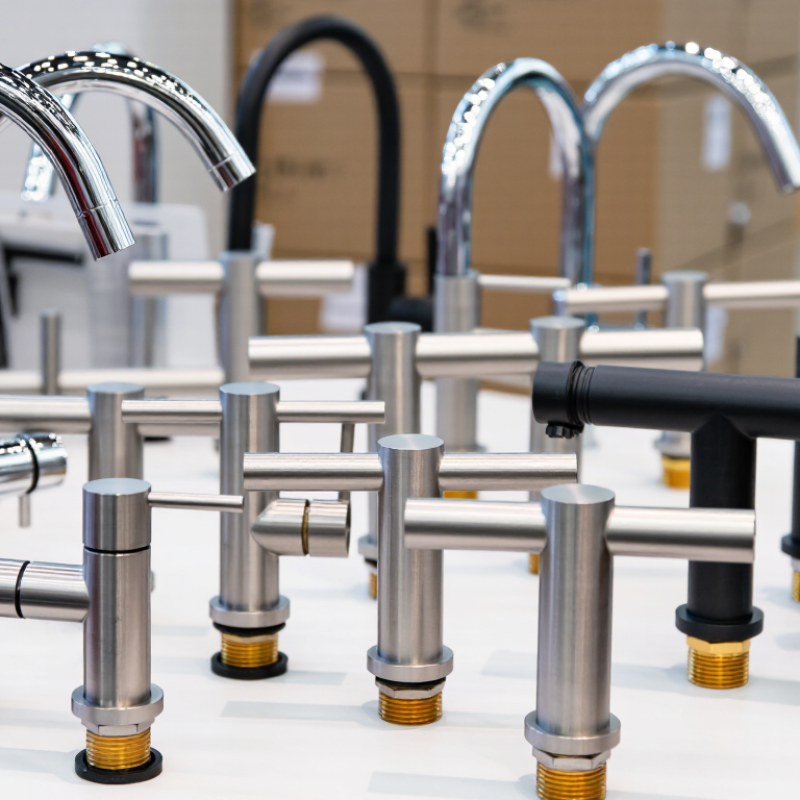
2026 Best Bulk Faucet Handle Suppliers for Global Buyers

Understanding Bulk Faucet Handle Suppliers and Global Buyer Needs

Understanding Bulk Faucet Handle Suppliers and Global Buyer Needs

Choosing bulk faucet handle suppliers requires more than comparing unit prices. Global buyers must match handle dimensions, thread standards, finishes, and installation methods with their target markets. A handle that fits one valve body may fail on another. I have seen small measurement errors delay an entire shipment. Request technical drawings, material details, and samples before approving production.

Reliable suppliers should explain their quality process clearly. Ask how they inspect plating, thread accuracy, surface scratches, and packing strength. Practical checks can include repeated installation tests and controlled corrosion testing. Request dated inspection records, not only attractive product photos. Carton labels, spare-unit ratios, lead times, and shipping terms also deserve attention. These details affect warehouse labor and after-sales costs.

Communication matters as much as manufacturing capacity. Suppliers should confirm specifications in writing and report changes before production. Video inspections can reveal inconsistent color or loose components. Still, remote checks have limits. I once trusted a sample too quickly and overlooked a packaging weakness. That mistake changed my process: approve a sealed pre-shipment sample and review random cartons. Buyers should also confirm applicable safety, labeling, and import requirements with qualified local advisers. Clear records build trust. In global sourcing, dependable cooperation often matters more than the lowest quotation.

Key Criteria for Evaluating Faucet Handle Manufacturers

For global buyers in 2026, evaluating faucet handle manufacturers requires more than comparing quoted prices. Start with material evidence. Ask whether handles use brass, stainless steel, zinc alloy, or engineered polymer. Request composition reports and sample parts. Check wall thickness, thread accuracy, spindle fit, and surface consistency. A handle should feel solid, not merely look bright. Small details matter.

Review the supplier’s production controls. Ask how incoming metal, machining tolerances, plating, and final assembly are inspected. Reliable factories can show inspection records, measuring equipment, and clear acceptance standards. Confirm daily or monthly capacity against your forecast. A supplier may promise fast output, yet struggle during peak seasons. Test a pilot order before committing to bulk volumes. It exposes packing weaknesses, color variation, and missing components.

Compatibility deserves careful attention. Verify cartridge dimensions, mounting methods, thread sizes, and installation instructions for each market. Request corrosion, torque, cycle, and finish tests when needed. Also examine packaging through a realistic drop test. A polished sample can hide inconsistent production. That possibility should stay visible. Communication is another quality signal. Can the manufacturer explain problems clearly and correct them with documented actions? Not every factory will fit every project. Leave room to reconsider after reviewing samples, records, and the first shipment.

Top Regions and Supplier Types for Bulk Faucet Handles

For global buyers, regional demand matters as much as unit price. The UN World Urbanization Prospects projects that 68% of the world’s population will live in urban areas by 2050. This supports steady replacement demand for faucet handles in apartments, hotels, and public buildings. East and South Asia offer broad factory capacity and competitive tooling costs. Europe prioritizes finish consistency, traceability, and water-efficiency documentation. North America favors reliable replacement compatibility and stable distribution. The Middle East often requires corrosion-resistant finishes for hard water and coastal conditions.

Supplier type should match the purchasing risk.
OEM manufacturers suit large orders needing custom geometry, packaging, or private specifications. Specialized component factories may provide tighter control over zinc alloy, stainless steel, ceramic, or plastic parts. Regional distributors can shorten delivery times, but their margins may reduce price flexibility. The International Trade Centre’s trade data shows substantial cross-border movement in plumbing fittings, yet customs codes do not always separate handles from complete faucets. That is an important limitation.

Industry forecasts from Grand View Research place the broader global faucets market on a continued growth path through the decade, supported by construction and renovation activity. Buyers should still inspect samples under real conditions. Check thread fit, cartridge compatibility, coating thickness, carton strength, and salt-spray results. Ask for ISO 9001 records where relevant, but do not treat certification as proof of every batch’s quality. A pre-shipment inspection remains useful. Small suppliers can be excellent. Sometimes, they are not.

Quality, Compliance, Pricing, and Minimum Order Requirements

2026 Best Bulk Faucet Handle Suppliers for Global Buyers

When assessing bulk faucet handle suppliers, inspect finish consistency, thread accuracy, and handle movement. A polished surface should remain even around edges and screw holes. Request production samples, not only catalog photos. In practical purchasing, small defects often appear after repeated assembly. Check alloy composition, coating thickness, cartridge compatibility, and packaging protection. A supplier should provide clear inspection records and traceable batch information. These details demonstrate experience and improve buyer confidence.

Compliance requires more than a general quality certificate. Ask for material declarations, test reports, labeling details, and documents required in your destination market. Requirements may differ by country and product application. Confirm whether handles meet restrictions on hazardous substances and potable-water contact, where applicable. Keep communication documented. Verbal promises are weak evidence. An independent inspection can verify dimensions, surface treatment, carton counts, and pre-shipment quantities.

Pricing should include tooling, sampling, packaging, freight, duties, and possible rework. The lowest unit price may hide fragile cartons or inconsistent plating. Compare landed cost instead. Minimum order quantities commonly depend on material, color, mold investment, and customization. Some suppliers accept mixed colors or staggered deliveries, but these arrangements may raise the price. Negotiate with realistic forecasts. Be cautious with unusually flexible offers. They may indicate weak production planning, although that is not always true. Even experienced buyers can overlook replacement parts, inspection fees, or seasonal delays. Suppliers should explain these risks clearly before accepting a purchase order.

How to Select and Work With the Right Global Supplier

How to Select and Work With the Right Global Faucet Handle Supplier

Selecting a bulk faucet handle supplier requires more than comparing unit prices. The World Bank’s 2023 Logistics Performance Index evaluates customs, infrastructure, shipment reliability, and timeliness. These factors directly affect landed cost and production schedules. Ask suppliers for factory audit records, material specifications, and recent export references. Confirm whether handles use stainless steel, brass, zinc alloy, or certified recycled materials. Request salt-spray results, thread measurements, coating thickness, and inspection photos from actual batches. Small details matter.

A reliable supplier should explain minimum order quantities, tooling ownership, packaging limits, and replacement procedures in writing. ISO’s 2023 survey reported more than 1.2 million ISO 9001 certificates worldwide, but certification alone does not prove consistent faucet-handle quality. Test samples from different production lots. Check fit on your valve assemblies, not only on a showroom sample. I also recommend a small pilot order before annual purchasing. It may seem slower. It often exposes weak packaging, uneven polishing, or unclear communication. Use UN Comtrade data to compare sourcing countries, tariffs, and trade flows, then evaluate the supplier’s real delivery history. A perfect scorecard is impossible. Leave room for factory visits, honest corrective actions, and one uncomfortable question: what happens when the first shipment is wrong?

2026 Best Bulk Faucet Handle Suppliers for Global Buyers - How to Select and Work With the Right Global Supplier

Evaluation Dimension Recommended Benchmark for Global Buyers Evidence to Request Why It Matters Suggested Weight
Product Compatibility Confirm fit with the target valve cartridge, stem profile, mounting method, screw pattern, and handle dimensions. Dimensioned drawings, CAD files, sample measurements, and compatibility declarations. Prevents installation failures, returns, and costly field modifications. 20%
Material and Finish Use corrosion-resistant metal or engineered polymer appropriate to the application; specify finish type, coating thickness, and color tolerance. Material declaration, coating specification, salt-spray or corrosion-test reports, and retained samples. Material and finish quality directly affect service life and appearance. 15%
Applicable Standards Select products tested against the requirements of the destination market, such as ASME A112.18.1/CSA B125.1 or EN 817 where applicable. Current test reports, declarations of conformity, and certification-scope documents. Standards compliance supports legal sale and reduces approval delays. 15%
Minimum Order Quantity For standard catalog handles, target an MOQ of approximately 100–500 pieces; for custom tooling or finishes, expect higher quantities. Written MOQ by model, color, finish, packaging method, and production batch. A clear MOQ protects cash flow and prevents unexpected production charges. 8%
Production Lead Time Typical planning range: about 20–45 days for repeat orders, excluding international transportation and customs clearance. Production schedule, sample approval timeline, capacity statement, and late-delivery procedure. Reliable lead-time information supports inventory and project planning. 10%
Quality-Control System Require incoming-material inspection, first-piece approval, in-process checks, final inspection, and documented sampling criteria. Quality manual, inspection checklist, AQL plan, nonconformance records, and pre-shipment inspection report. A documented process is more dependable than visual inspection alone. 12%
Sample and Approval Process Approve a production-representative sample before mass production; record dimensions, finish, packaging, and functional requirements. Signed sample approval sheet, golden sample, inspection photos, and change-control procedure. Prevents unauthorized changes between quotation, sample, and shipment. 8%
Packaging and Export Readiness Use moisture-resistant inner protection, export-grade cartons, barcode or lot identification, and palletization suitable for the transport mode. Packaging specification, carton dimensions, gross/net weights, pallet plan, and shipping marks. Good packaging reduces scratches, corrosion, carton damage, and receiving errors. 5%
Commercial Terms Compare total landed cost using the same Incoterm, currency, payment schedule, freight assumption, duty estimate, and inspection requirement. Formal quotation, Incoterm location, tooling charges, payment terms, validity period, and warranty conditions. The lowest unit price may not be the lowest delivered cost. 5%
Traceability and After-Sales Support Require batch identification, replacement-part availability, documented warranty terms, and a defined response time for claims. Lot-code format, warranty policy, corrective-action template, spare-part list, and service contact procedure. Traceability speeds up root-cause analysis and corrective action. 2%
Buyer validation note: Benchmarks are general sourcing guidelines. Confirm the final technical, regulatory, packaging, and logistics requirements for the destination country before placing a bulk order.

FAQS

What should buyers compare when choosing a bulk faucet handle supplier?

Compare dimensions, thread standards, finishes, materials, packaging, lead times, and replacement procedures. Unit price alone can mislead. A lower quote may create higher after-sales costs.

Why are technical drawings and samples important?

They confirm handle size, thread accuracy, installation method, and valve compatibility. A small measurement error can delay a full shipment. Test samples on your actual valve assemblies.

Which materials are commonly used for faucet handles?

Common options include stainless steel, brass, zinc alloy, and certified recycled materials. Ask for material specifications and supporting documents. Appearance does not prove durability.

How can buyers check product quality before shipment?

Request inspection records with dates and batch details. Check plating, scratches, thread accuracy, loose parts, and coating thickness. Repeated installation tests are useful.

What packaging checks should buyers request?

Review carton strength, internal protection, labels, and spare-unit ratios. Inspect random cartons, not only one perfect package. Weak packing can damage polished surfaces.

Is a quality certificate enough to approve a supplier?

No. A certificate does not guarantee consistent handle quality. Test samples from different production lots. Real batch evidence matters more than attractive paperwork.

Should buyers place a pilot order first?

Yes, a small pilot order can reveal uneven polishing, weak packaging, or unclear communication. It may feel slower. That delay can prevent larger losses.

How should buyers manage supplier communication?

Confirm every specification in writing before production. Require advance notice for material, color, or design changes. Video inspections help, but remote checks have limits.

What delivery details should buyers confirm?

Confirm minimum order quantities, lead times, shipping terms, carton labels, and replacement procedures. Review the supplier’s actual delivery history. A perfect scorecard is impossible.

What should buyers do when the first shipment is wrong?

Agree on inspection, correction, replacement, and evidence procedures before ordering. Ask how the supplier handles defects openly. I once trusted a sample too quickly. That mistake changed my process.

Conclusion

Choosing the right Bulk Faucet Handle supplier is essential for global buyers seeking reliable quality, stable supply, and competitive costs. This process begins with understanding product specifications, target markets, installation standards, and expected order volumes. Buyers should evaluate manufacturers based on material quality, production capabilities, design flexibility, quality-control systems, export experience, and communication efficiency. Suppliers may come from different manufacturing regions and business types, including specialized component factories, integrated plumbing-product manufacturers, and custom production partners.

Before placing an order, buyers should carefully compare compliance documentation, inspection procedures, packaging standards, pricing structures, lead times, payment terms, and minimum order quantities. A dependable supplier should provide clear samples, consistent product performance, transparent quotations, and practical support throughout development and delivery. By defining requirements in advance, verifying manufacturing capacity, negotiating realistic terms, and maintaining regular communication, global buyers can reduce sourcing risks and build a long-term partnership that supports both market growth and customer satisfaction.

Oliver

Oliver

Oliver is a seasoned marketing professional with a wealth of expertise in driving brand awareness and engagement. With a deep understanding of our company's product offerings, he consistently delivers high-quality content that enriches our professional blog. His insights not only shed light on......